

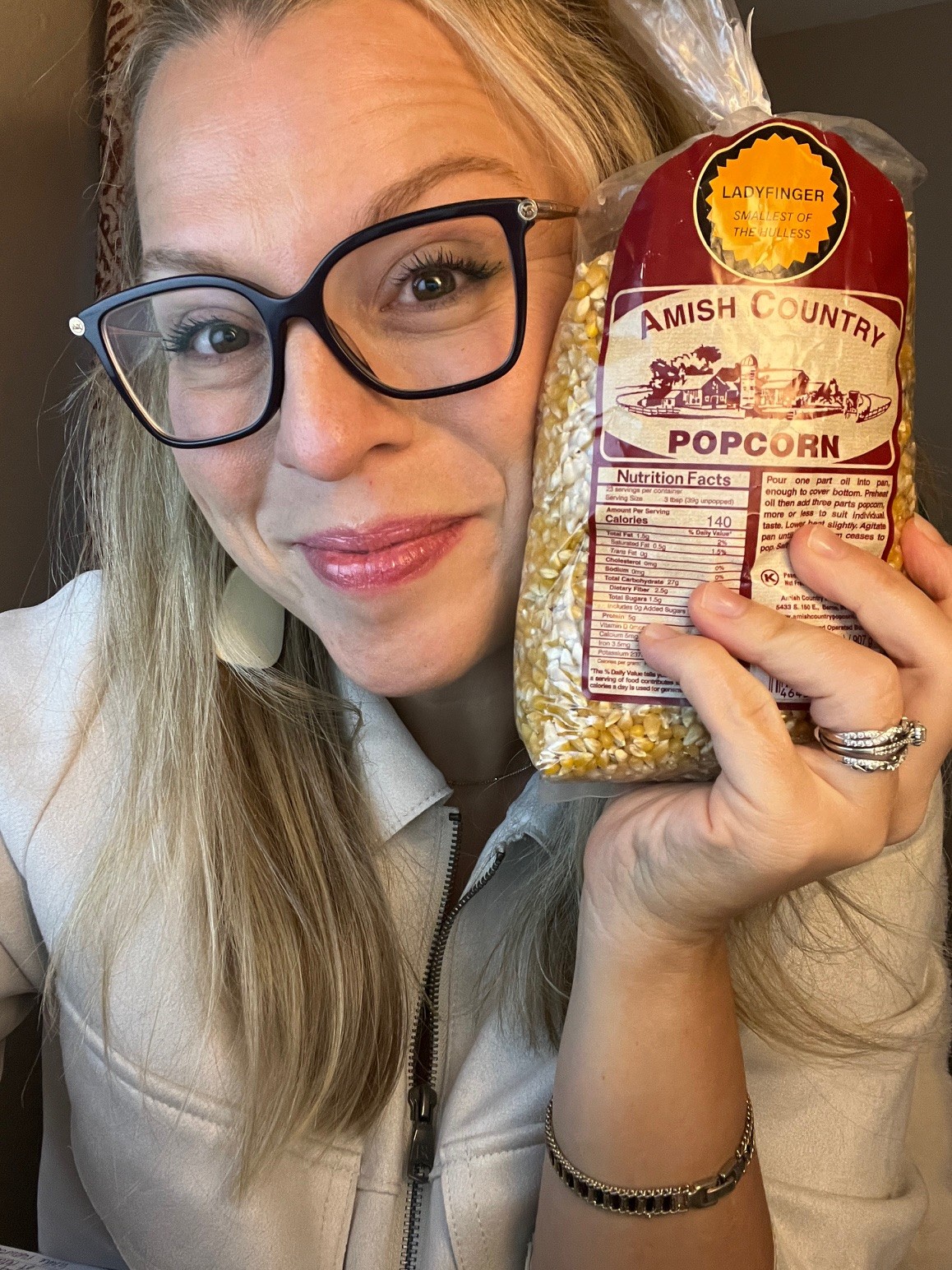

I kind of went overboard, I admit it.
A few weeks ago, I was on the hunt for a new activity that my three-year-old and I could do together. Cue homemade popcorn. Delicious, nutritious, and an easy afternoon win.
So, we headed to Murdoch’s, a local ranch supply store that offers great products at good prices and far too many temptations for homestead-dreamers and toddlers alike. After searching the aisles and finding none, I grabbed something else and headed to checkout.
And there they were: Popcorn kernels! I walked over, started looking through their assortment, which had more than I anticipated, and saw one word:
Amish.
That was it. That was all I needed to know that this was the popcorn for me.
I proceeded to buy three bags.
Not only did the word Amish instantly signal something positive to me — simplicity, craftsmanship, tradition, quality — but the product itself offered variety, which sealed the deal. Hull-less. Multi-color. One called Ladyfingers (tiny, delicate, and completely new to me).

We were excited to bring our goodies home, but I couldn’t stop thinking about the purchase itself. I didn’t do research. I didn’t compare brands or prices. I knew what I wanted, and when I saw one word that matched what I was already hoping to find, I was done.
That single word carried an entire story in my mind, and that is the power of brand association.
What That Moment Taught Me
I didn’t need a sales pitch or a clever package design. I already trusted the story behind the word.
That’s what strong brands do: they anchor meaning in memory. When we see or hear something familiar, we pull from the feelings, experiences, and values we’ve already attached to it.
Marketing research backs this up. A 2023 report from Harvard Business Review highlighted that consumers make up to 95% of their purchase decisions subconsciously, often relying on emotional associations rather than rational comparisons. In other words, our brains default to what feels known and trustworthy.
Similarly, brand psychologist Jenni Romaniuk, author of Building Distinctive Brand Assets, explains that mental availability — the ability of a brand to come to mind easily in a buying situation — is one of the strongest predictors of purchase. Those associations (colors, words, images, tone) are what make a brand easy to remember and easy to choose.
I wasn’t buying popcorn. I was buying trusted quality. I was buying into the story of how it would taste, how it was made, and what it represented.
That’s what every founder is working toward, whether you realize it or not: building a brand that people don’t have to think twice about.
How to Build Brand Associations That Stick
If you want people to instinctively trust your brand or reach for it first, it’s not about being the loudest. It’s about being the most consistent.
Here’s how I think about it:
Consistency builds trust. When your voice, visuals, and tone align, people start to rely on you.
Repetition builds memory. The more you reinforce your message and aesthetic, the faster people remember you.
Emotion builds connection. People may forget your words, but they’ll remember how your brand made them feel.
When those three things line up, your brand starts to work for you in the background, quietly, powerfully, and without needing to say much at all.
The Bigger Lesson
Strong brand associations aren’t built overnight. They form through small, intentional choices that accumulate over time. The way you write. The colors you use. The tone you carry.
Every detail either strengthens or confuses that memory.
At Founder’s Mirror, that’s exactly what we help founders do. We help shape those small, consistent details into a brand that people don’t have to overthink. The kind they see once and just know.


Comments +